:: Clipping “Sad isn’t quite the word” (“Triste não é ao certo a palavra”) (2023) [Portuguese/English] – Download HERE
:: REVIEW “O ODISSEU” – Paulo Zan (September 24, 2024)
A HOLLOW PROMISE THAT EVERYTHING WILL BE OKAY: A ‘REVIEW’ OF SAD ISN’T QUITE THE WORD, BY GABRIEL ABREU
Gabriel does not offer the reader the “comfort” of a full stop. In Chapter 53, when he recalls a memory of his mother’s past through someone else, he shatters something inside me. He manages to pull from my face those tears I hid from my mother because I thought I needed to be strong to support her during that time. (…) Sad Isn’t Quite the Word made me let my guard down a little. To feel. And above all, to feel that literature plays an important role in confronting, in placing the reader before these uncertainties, the fragments that make up a life. This is Gabriel Abreu’s debut, and it’s a remarkable success. I don’t think it’s a “book for everyone,” but I believe that for those who have the courage to face a grief that builds slowly, it could be a powerful read. Not at all comforting.

§§§
:: “LITERARY HIGHLIGHTS OF 2023”, JORNAL “O GLOBO” – Ruan de Sousa Gabriel (December 13, 2023)
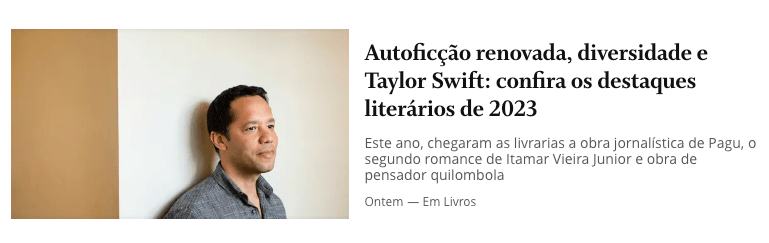
RENEWED AUTOFICTION, DIVERSITY, AND TAYLOR SWIFT: CHECK OUT THE LITERARY HIGHLIGHTS OF 2023
This year, bookstores welcomed the journalistic work of Pagu, the second novel by Itamar Vieira Junior, and the work of a quilombola thinker.
Even autofiction has stopped looking only at itself: many works have emerged in which authors revisit their own stories to better understand the history of all of us. (…) A blend of autofiction and sociological essay, What Is Mine [by José Henrique Bortoluci] directly engages with the literary project of the French Nobel laureate Annie Ernaux and with a handful of recently released works by authors who dig into family history to shed light on social history, such as Who Killed My Father and A Woman’s Battles and Transformations (Todavia) by the French writer Édouard Louis, Exploitation (Todavia) by the Peruvian Gabriela Wiener, Get Out of My Sunlight (Autêntica Contemporânea) by Felipe Charbel, The Small Chances (Todavia) by Natalia Timerman, Sad Isn’t Quite the Word (Companhia das Letras) by Gabriel Abreu, and John by Julia Souza (Âyiné).
§§§
:: LIST “THE BEST BOOKS OF 2023”, “SÃO PAULO REVIEW” (December, 2023)

§§§
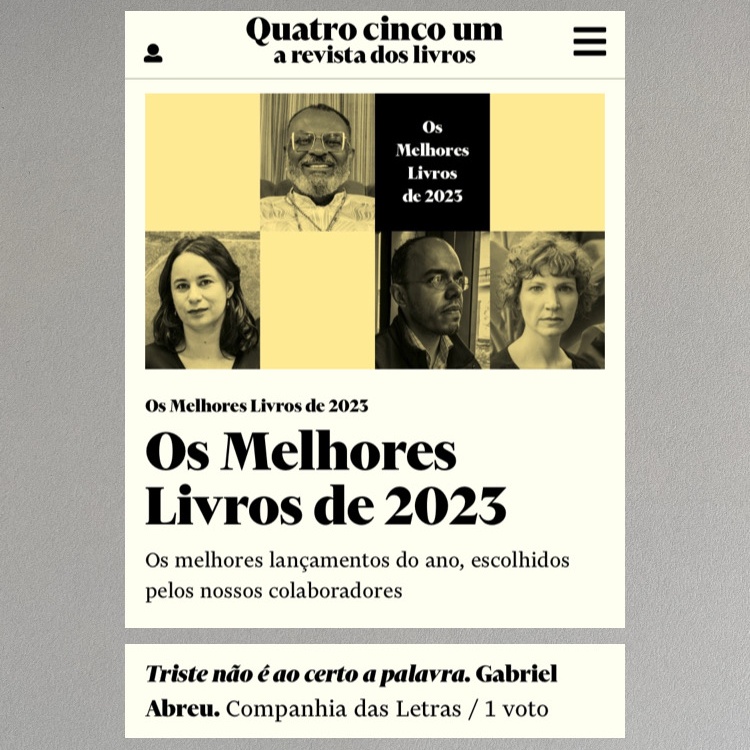
:: LIST “THE BEST BOOKS OF 2023”, “QUATRO CINCO UM” MAGAZINE (December 1, 2023)
§§§
:: NEWS ARTICLE, JORNAL “VALOR ECONÔMICO” – Tatiana Salem Levy (April 28, 2023)
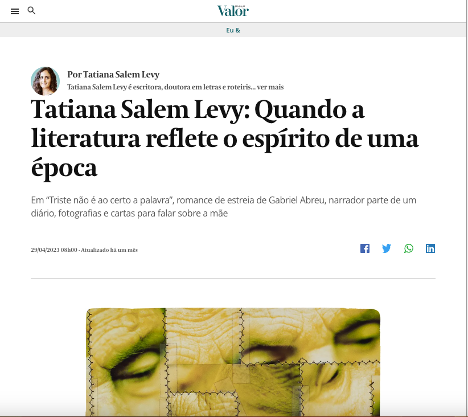
TATIANA SALEM LEVY: WHEN LITERATURE REFLECTS THE SPIRIT OF A TIME
In “Sad isn’t quite the word”, Gabriel Abreu’s debut novel, the narrator uses a diary, photographs and letters to talk about his mother
Like the movement of memory itself, Gabriel sometimes brings things to the surface, illuminating them, presenting them, and sometimes leaves them immersed in oblivion. It is in this game of ascents (towards light, towards language) and descents (towards darkness, towards silence) that he builds this novel, which is already the certainty of an author who has something to say. And who says it with intelligence and emotion.
§§§
:: INTERVIEW, “PUBLISH NEWS” – Guilherme Sobota (July 4, 2023)
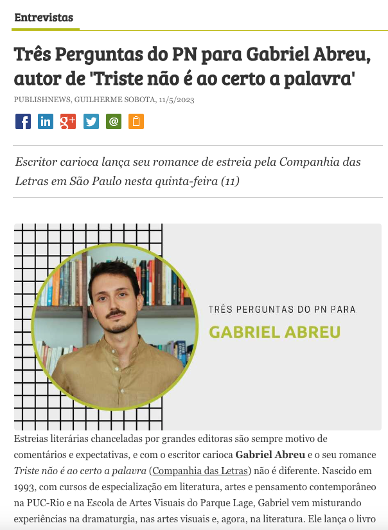
THREE QUESTIONS FROM PN TO GABRIEL ABREU, AUTHOR OF ‘SAD ISN’T QUITE THE WORD’
Writer from Rio launches his debut novel by Companhia das Letras in São Paulo this Thursday (11)
Literary debuts endorsed by major publishers are always a reason for comments and expectations, and with the Rio de Janeiro writer Gabriel Abreu and his novel “Sad isn’t quite the word” (Companhia das Letras) it is no different. (…) Perhaps his multidisciplinary background is what lends Gabriel Abreu’s book its very refined form. The narrator character, G., tries to deal with his mother’s absence when he finds a box with a diary, photographs and letters received by her. He then begins to explore these elements to reestablish the relationship, but also, in some way, to try to understand his own identity. What emerges then is a puzzle that the writer puts together with unusual skill in a debut novel.
§§§
:: BOOK REVIEW, “SCREAM & YELL” – Gabriel Pinheiro (July 4, 2023)
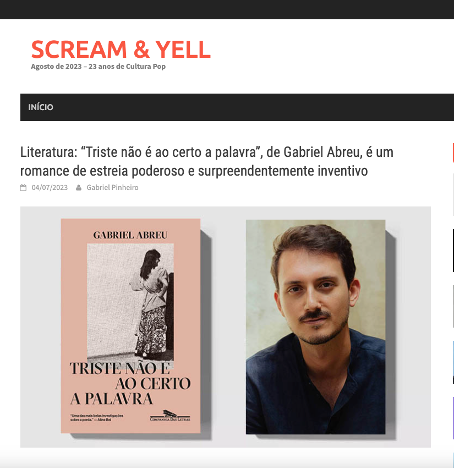
LITERATURE: “SAD IS NOT THE RIGHT WORD”, BY GABRIEL ABREU, IS A POWERFUL AND SURPRISINGLY INVENTIVE DEBUT NOVEL
Yes, sad isn’t quite the word that defines the whirlwind of feelings that invades G., just as perhaps it is not the word that, in the end, can translate the reading experience, after finishing the last page. There are many words that fit into Gabriel Abreu’s book, a powerful and surprisingly inventive debut novel.
§§§
:: NEWS ARTICLE, JORNAL “O GLOBO” – Bolívar Torres (July 15, 2023)
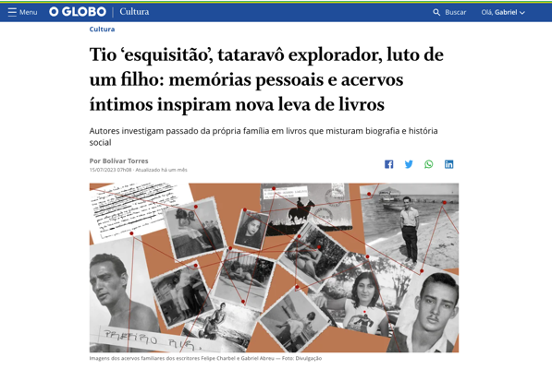
‘WEIRDO’ UNCLE, EXPLORER GREAT-GREAT-GRANDFATHER, A MOURNING SON: PERSONAL MEMORIES AND INTIMATE COLLECTIONS INSPIRE A NEW WAVE OF BOOKS
Authors investigate their own family’s past in books that mix biography and social history
Unlike Charbel, writer and artist Gabriel Abreu, 30, uses the term autofiction to define “Sad isn’t quite the word”. His mother, Miriam Martello, suffers from a neurodegenerative disease — she cannot speak and depends on a team of professionals for everything. The book was the way he found to get to know the woman she was or could have been. To fill in the incomplete layers of her life, the author goes through emails, medicine package inserts, astrological charts, medical diagnoses, as well as a cardboard box with a diary, hundreds of photographs and 68 letters from his mother. When mysteries persist, he turns to his imagination.
§§§
:: PODCAST (ENTREVISTA) “HISTÓRIAS DIVERSAS” (August 25, 2023)
§§§
:: PODCAST (BOOK REVIEW) “30:MIN 443” (August 25, 2023)
§§§
:: FEEDBACK FROM READERS (April – September, 2023)
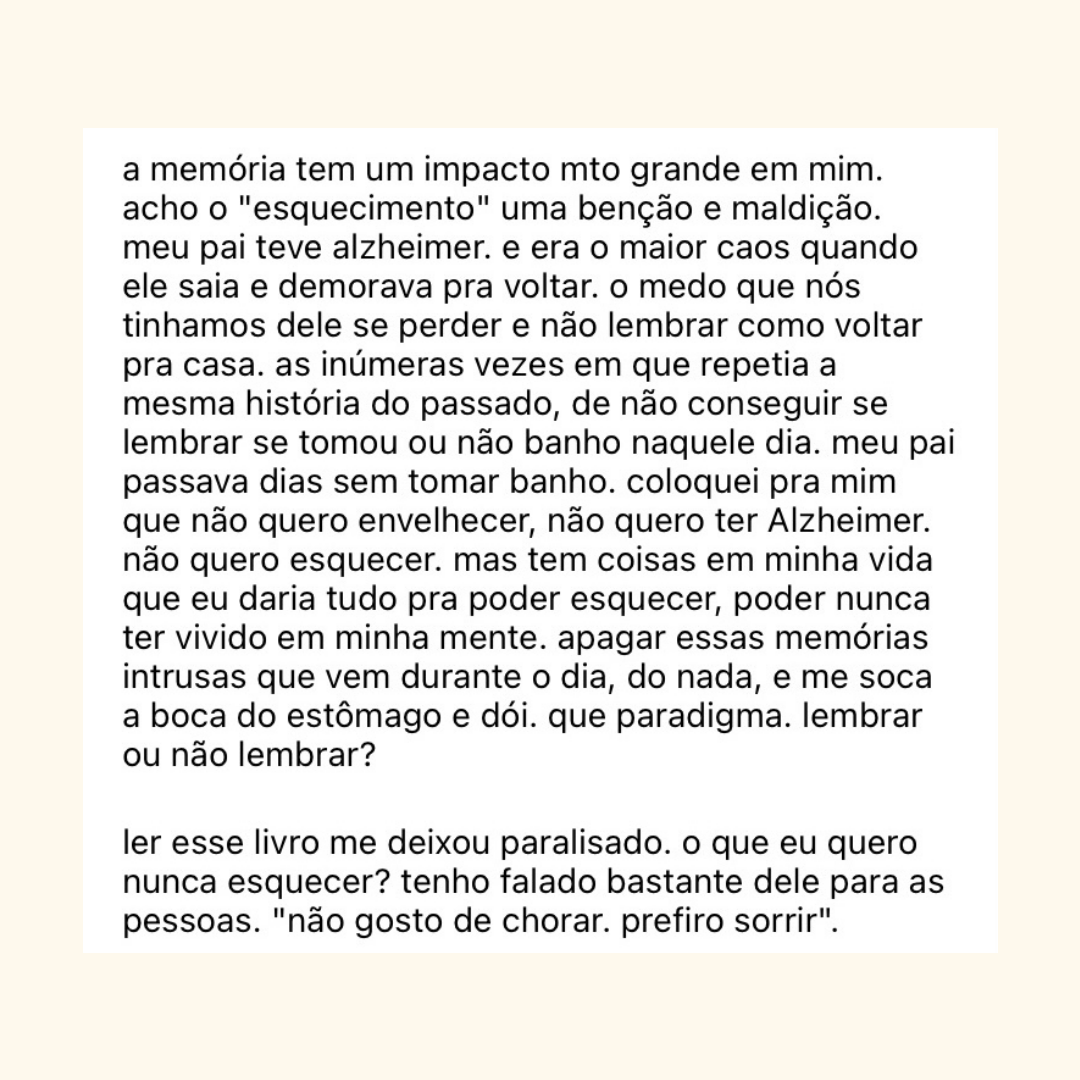
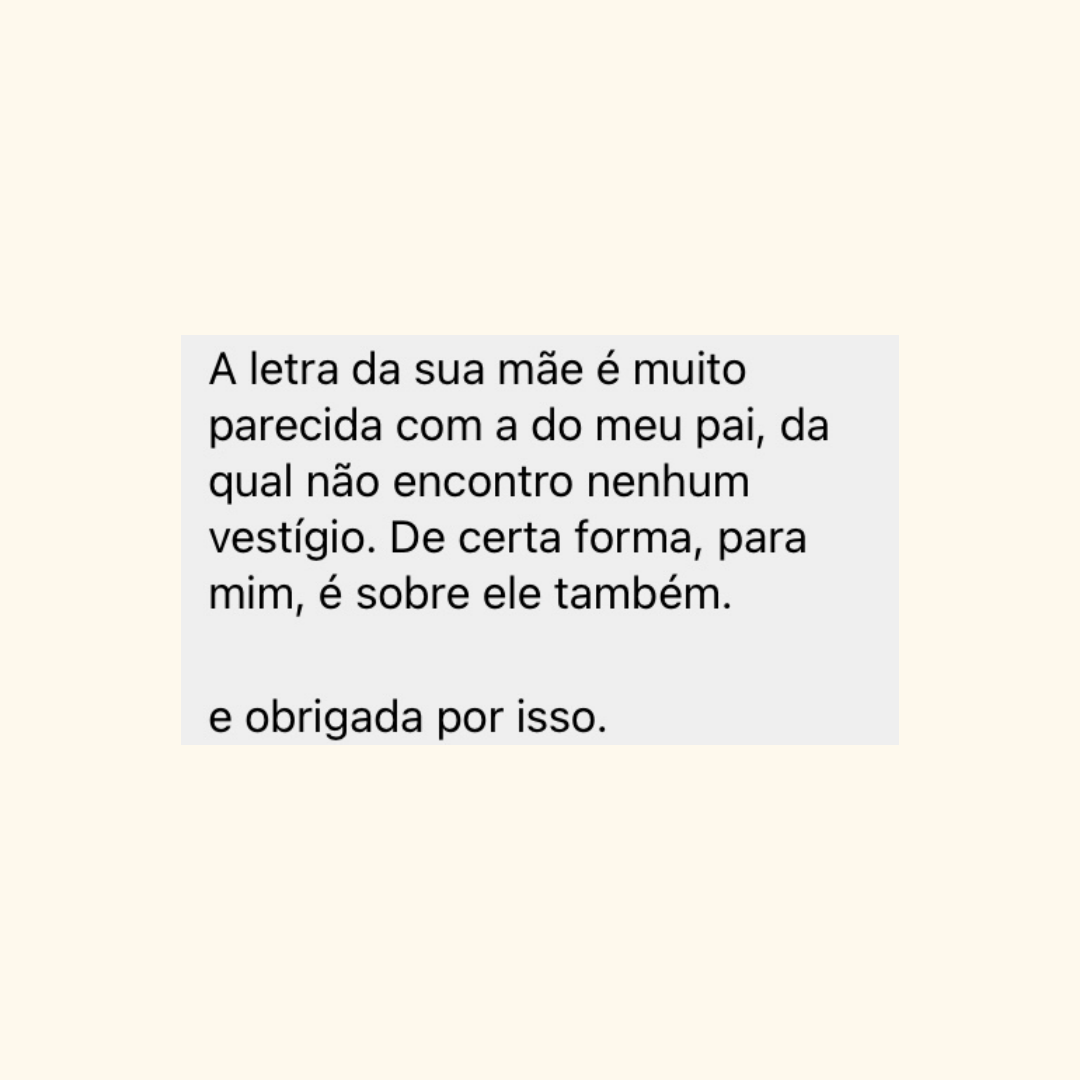
“Your mother’s handwriting is very similar to my father’s, of which I can’t find any trace. In a way, for me, it’s about him too. And I thank you for that.”
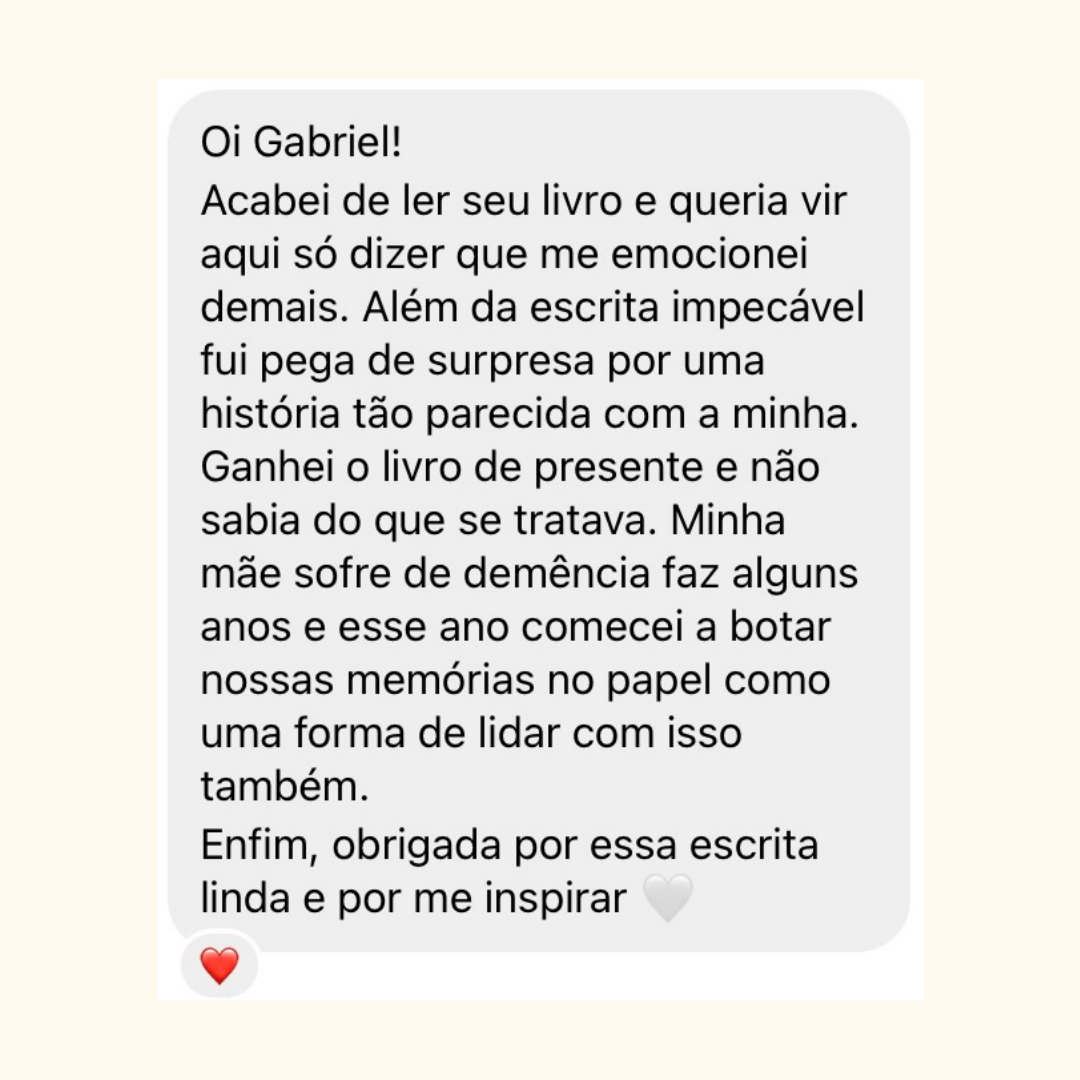
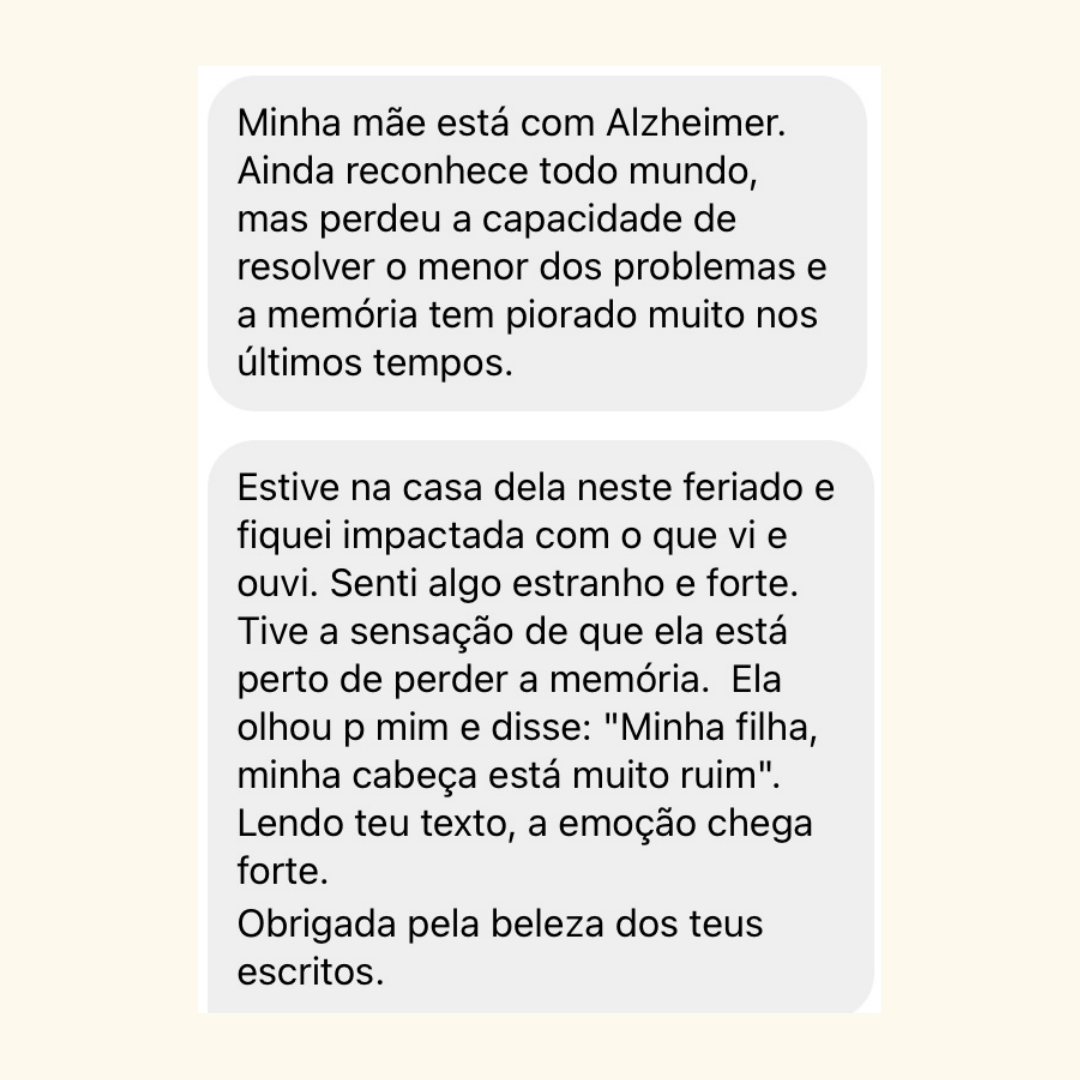
“I just read your book and I just wanted to come here and say that I was really moved by it. In addition to the impeccable writing, I was taken by surprise by a story so similar to mine. I received the book as a gift and didn’t know what it was about. My mother has suffered from dementia for a few years and this year I started putting our memories on paper as a way of dealing with that. Anyway, thank you for this beautiful writing and for inspiring me.”
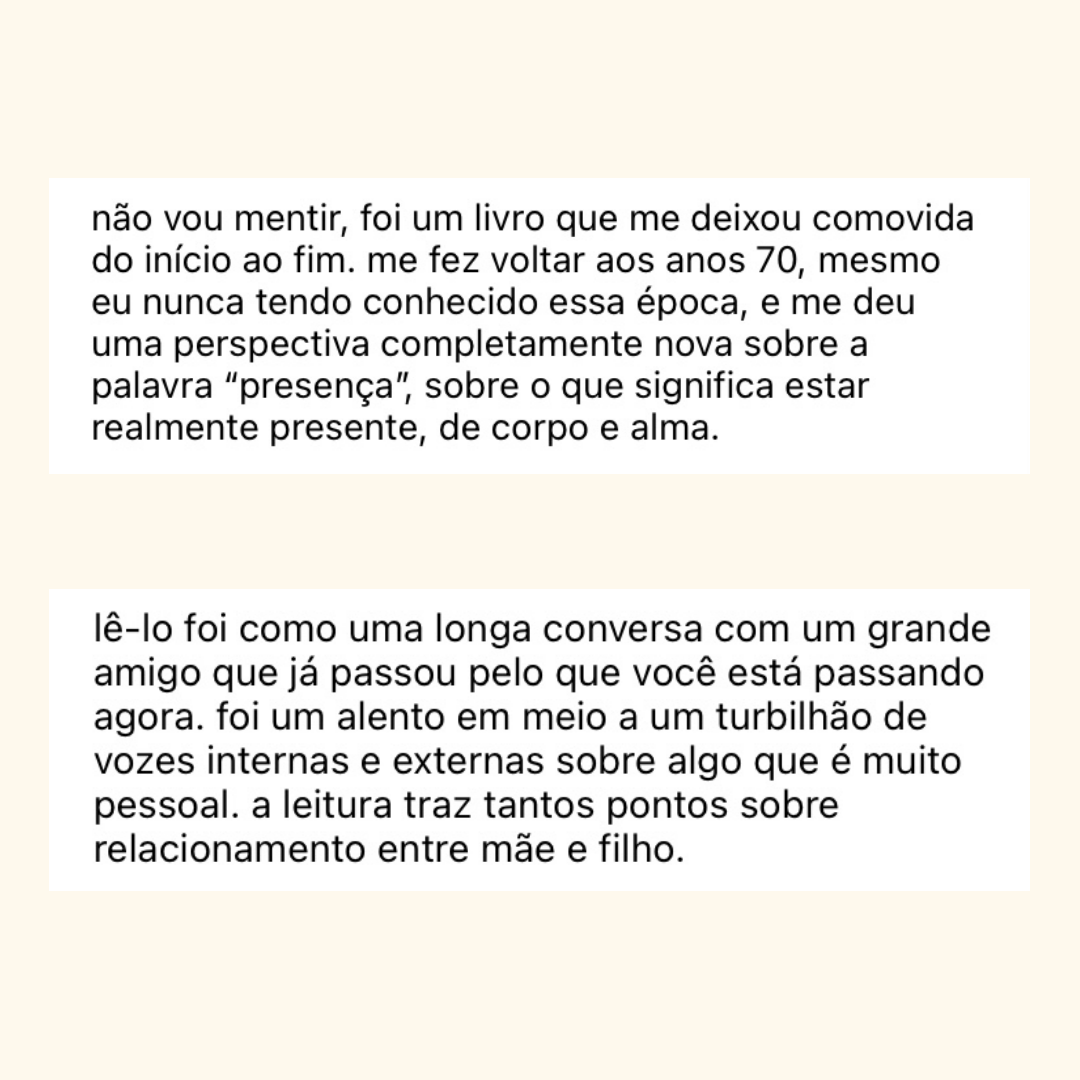
“I’m not going to lie, it was a book that left me moved from start to finish. It took me back to the 70s, even though I never knew that time, and gave me a completely new perspective on the word “presence”, on what it means to be truly present, body and soul.”
“Reading it was like having a long conversation with a good friend who has been through what you are going through. It was a breath of fresh air amidst a whirlwind of internal and external voices about something that is very personal.”
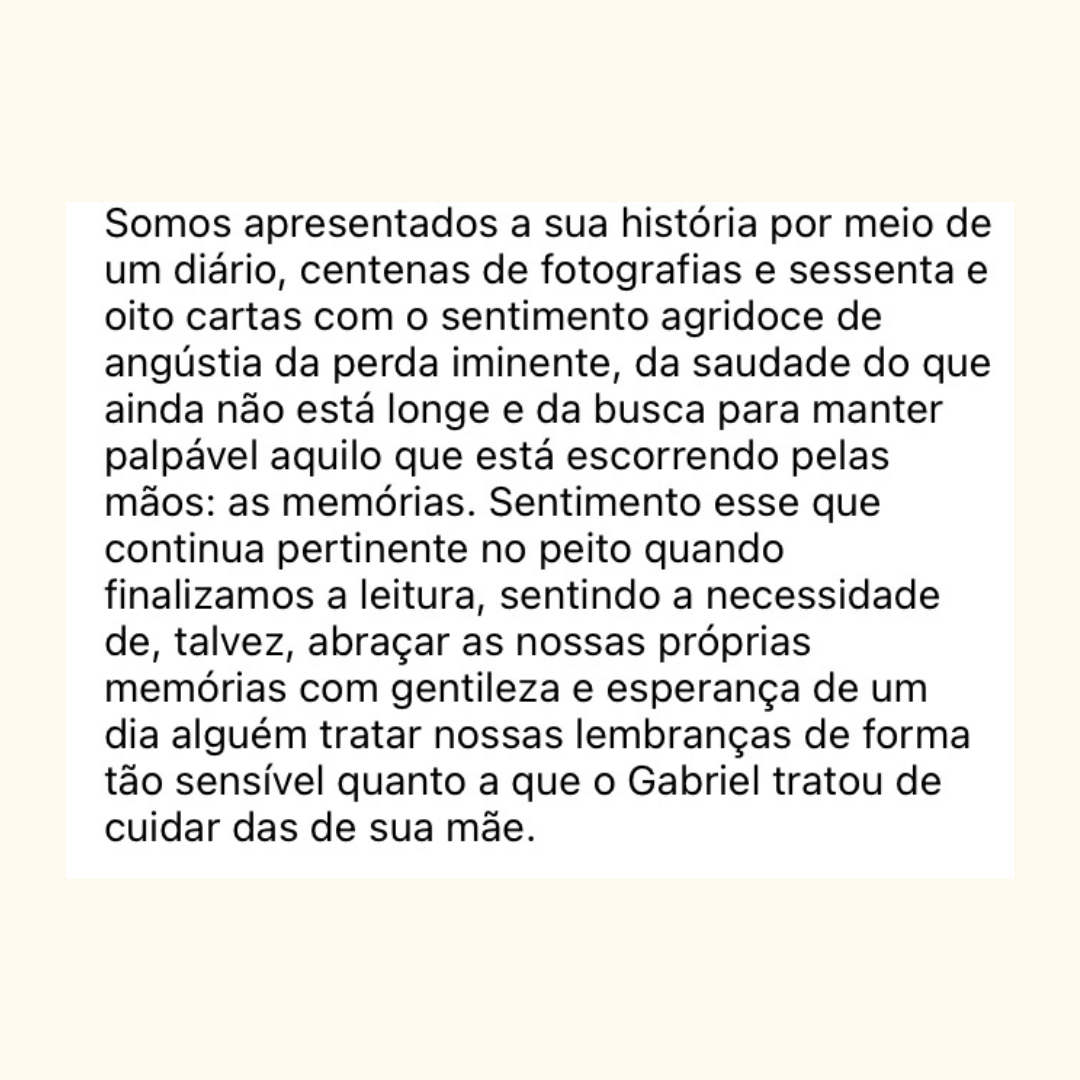
“We are introduced to his story through a diary, hundreds of photographs and 68 letters with the bittersweet feeling of an imminent loss. (…) These feelings remain in our chest when we finish the book and feel the need to embrace our own memories with kindness and the hope that someday someone treats our memories in as sensitive a way as Gabriel did with his mother’s.”
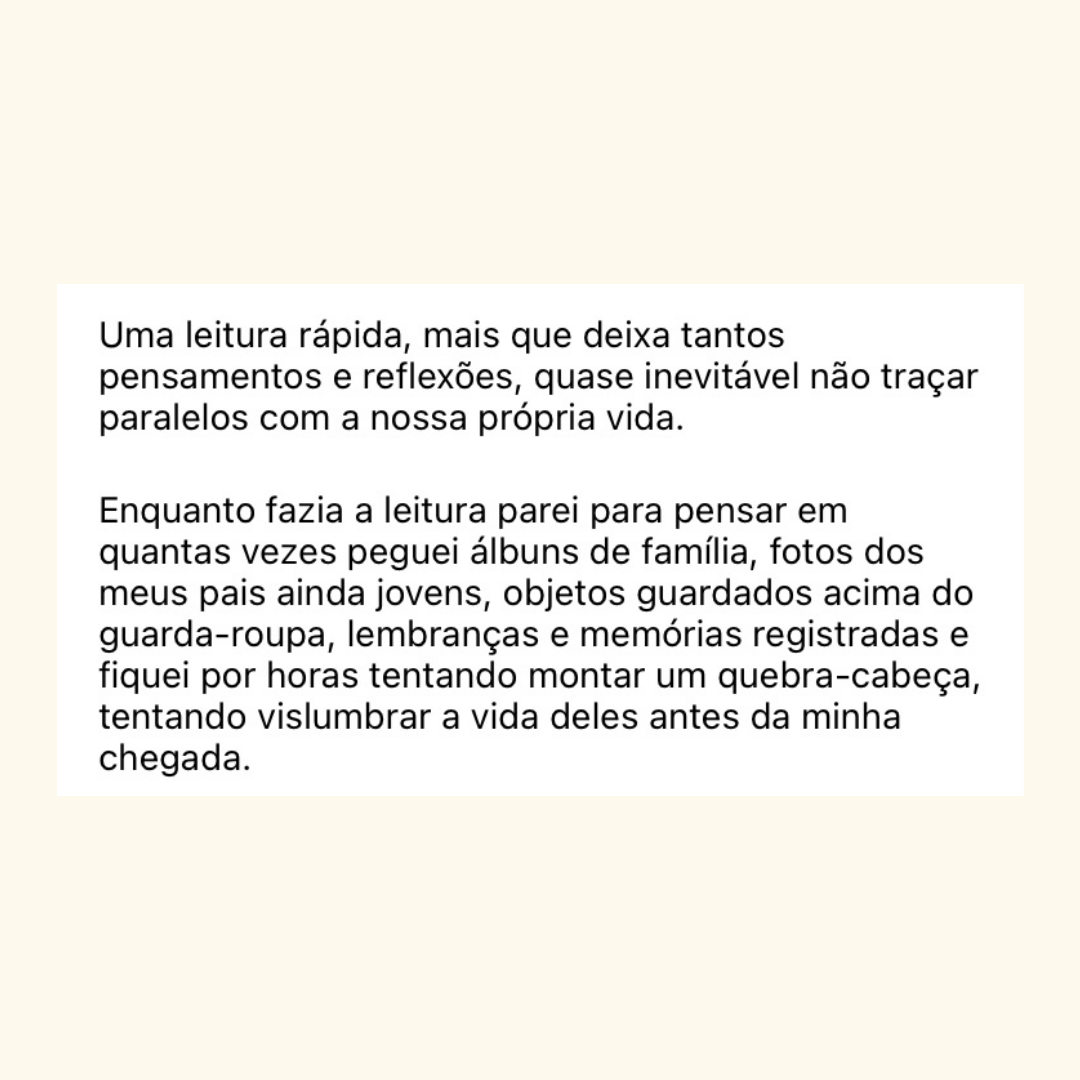
“A quick read, but one that leaves you with many thoughts and reflections, it is almost inevitable not to draw parallels with our own lives. While I was reading it, I couldn’t help but think of the times when I went through my family albums, photos of my parents when they were still young, past objects, souvenirs and recorded memories, and spent hours trying to put together a puzzle, trying to glimpse the lives of my parents before my arrival.”
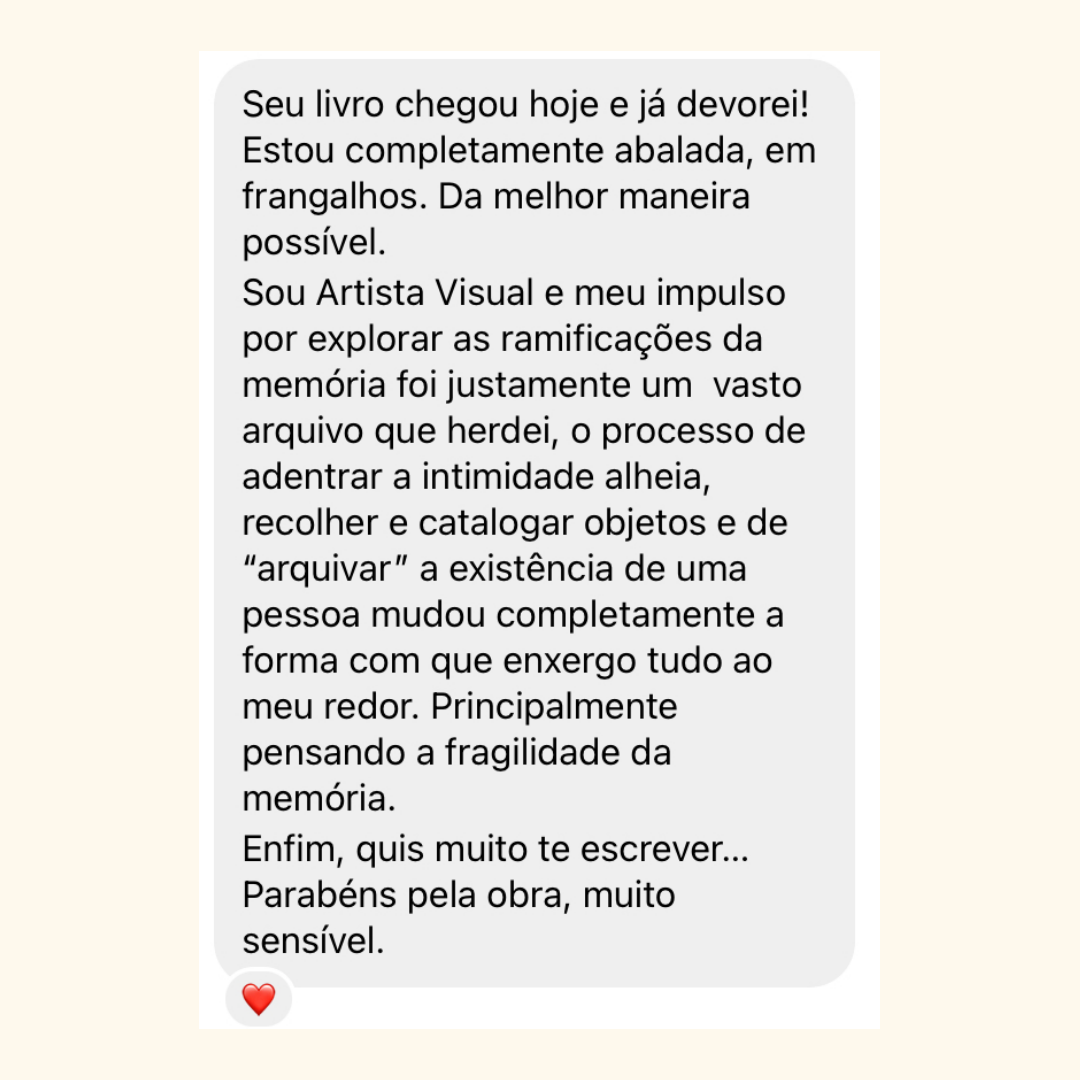
“Your book arrived today and I’ve already devoured it! I am completely shaken, in shambles. In the best way possible. ( …) Congratulations on the work, very touching.”
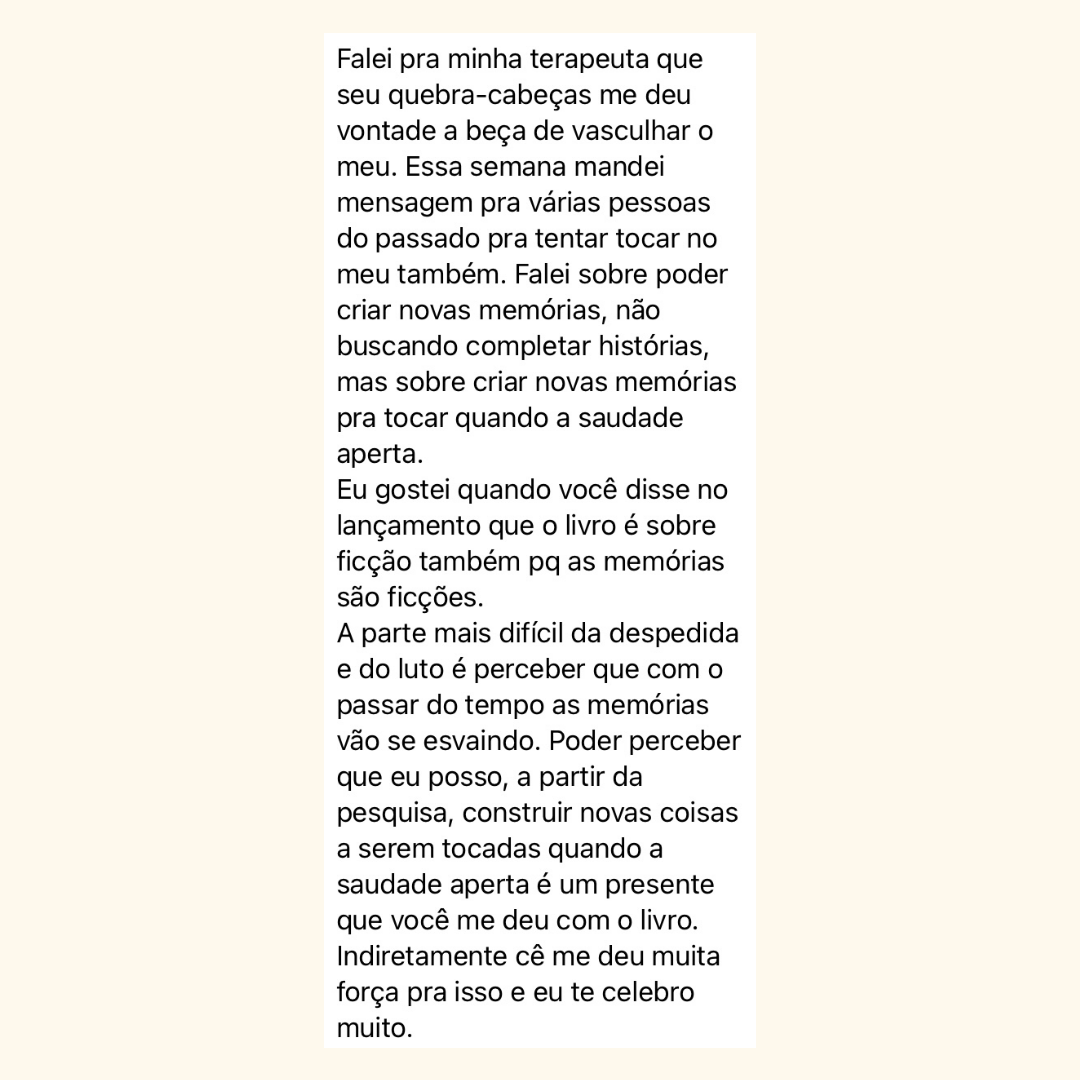
“The hardest thing about saying goodbye and grieving is realizing that, as time passes, our memories fade away. With your book, I realized that, through research, I can build new things I can touch when I miss my loved ones, and that was a great gift. You gave me a lot of strength to do that and I celebrate you for it.”
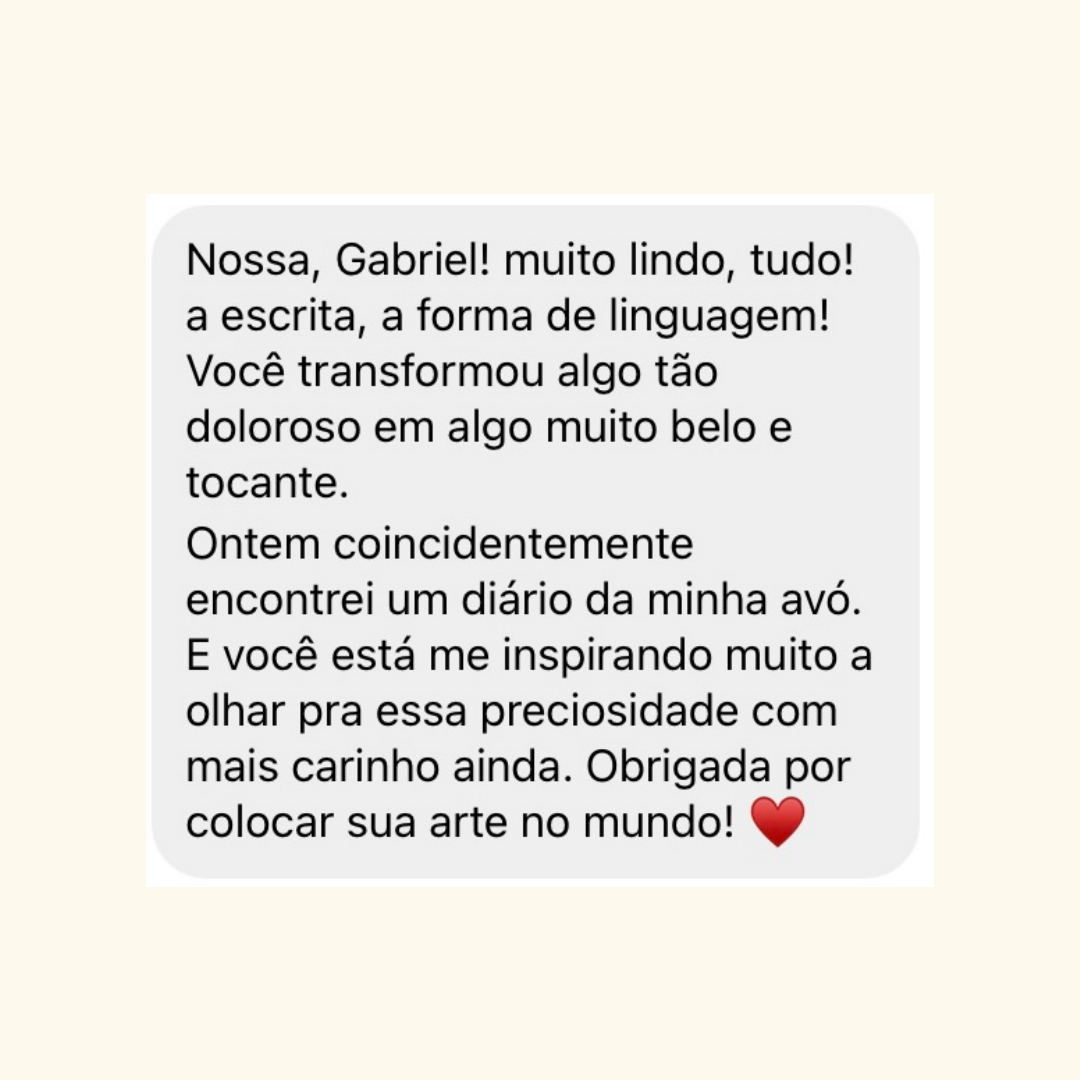
“So beautiful! Your writing, the form. You turned something so painful into something very beautiful and touching. Coincidentally, yesterday I found my grandmother’s diary. And you are really inspiring me to look at this precious thing with even more affection. Thank you for putting your art in the world!”
 gabriel abreu